
Every year on May 20th, World Bee Day reminds us just how important bees and other pollinators are to our environment, agriculture, and food systems.
At Allure Pest Solutions, we believe pest management is about more than simply removing insects. It’s about understanding the role they play in the ecosystem and making responsible decisions wherever possible.
To celebrate World Bee Day, we spoke with Sarah from Swarm SE Eco Bee Management about ethical bee rescue, responsible beekeeping, and why bees deserve far more respect than they often receive.
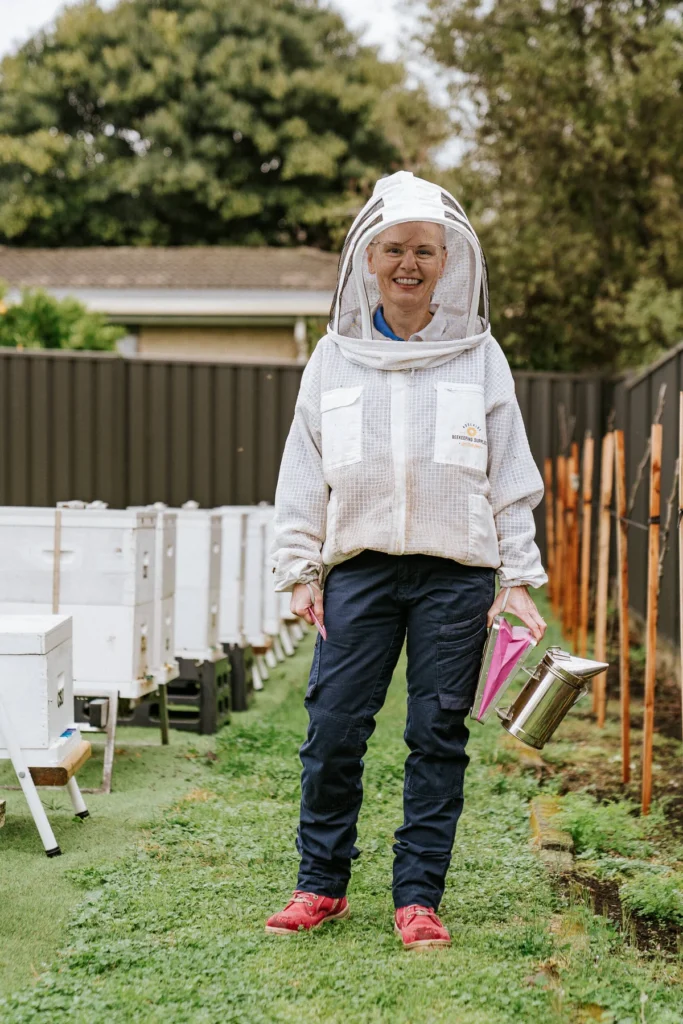
How did you first get involved with bees?
“Honestly, it started through pest management. We were attending more and more bee jobs, Sam and I became really uncomfortable with how often healthy colonies were automatically being treated as pests instead of living pollinators that potentially could have been rescued or rehomed.
That pushed us to start learning properly instead of pretending we knew what we were doing. Sam and I invested a lot of time, money and weekends travelling to Adelaide for training and mentoring because we wanted to understand bees properly and make better decisions around them. Sam completed formal basic beekeeping training through Bee Prepared, and I went on to complete my Certificate III in Beekeeping as well.
The deeper I got into the industry, the more respect I gained not just for bees, but for good beekeepers. Proper hive management is hard work. Bees are livestock under legislation and keeping them comes with real responsibilities around welfare, biosecurity, feeding, disease management and now varroa mite preparedness as well.
One of the best parts has honestly been meeting smaller-scale ethical beekeepers who quietly do incredible work. The amount of care, knowledge and effort that goes into properly managing hives and producing quality honey is huge.
That’s a big part of why we created Swarm SE Eco Bee Management and the Swarm Collective alongside Spiderman SE Eco Pest Management. We wanted to create something that supports ethical bee rescue and relocation, but also supports good beekeepers producing beautiful local honey and beeswax products properly.
We really want to help shift the conversation in the industry back toward quality, transparency, bee welfare and respect for the people doing the hard work behind the scenes.”
What’s something most people misunderstand about bees?
“I think one of the biggest misconceptions is that bees are aggressive and just looking for reasons to sting people. Most of the time they’re actually very focused on protecting their colony and getting on with their work.
I also think people misunderstand beekeeping itself. There’s this idea now that you can buy a hive, stick it in the backyard and suddenly become a beekeeper. In reality, bees require ongoing management and responsibility.
Registered beekeepers have obligations for a reason. Hives need monitoring for disease and pests, especially with varroa mite now in Australia. They need feeding during difficult seasons, swarm management, inspections and proper care.
Another thing people sometimes misunderstand is rescue and relocation. We absolutely support rescuing bees where appropriate, but not every colony is suitable to relocate or breed from. Some colonies have very defensive genetics or other management issues. Responsible beekeeping is about balancing bee welfare, public safety and long-term hive health, not pretending every situation is simple.”
What should people do if they discover a beehive on their property?
“Don’t panic and definitely don’t spray them. Keep kids and pets away from the area and contact a qualified beekeeper or bee removal specialist for advice.
A lot of swarms are actually temporary and are simply stopping while scout bees search for a permanent home. Trying to spray them or block entrances usually makes things much worse for both the people and the bees. The earlier someone gets proper advice, the better the outcome usually is.”
What are some simple ways we can help support bees?
“Bees need pollen as their protein to fed their brood and nectar as their carbohydrate to produce wax and honey, so planting bee-friendly plants that bloom across different seasons is a great start.
Being mindful with pesticide use is another huge one. A lot of pollinator exposure happens unnecessarily around homes and gardens, especially when products are applied during flowering periods.
Supporting ethical local beekeepers matters too. Buying local honey helps support managed hives, pollination and people who are investing serious time and effort into biosecurity and bee welfare.
Even just learning to appreciate bees instead of fearing them makes a difference.”
Are bees important to the Australian environment?
“Absolutely. Pollinators play a massive role in biodiversity, agriculture and food production. Without them, entire ecosystems are affected.
People also often forget how many incredible native bee species Australia has alongside honey bees. Honey bees are hugely important agriculturally, but our native pollinators matter enormously too.
Managed hives and responsible beekeepers are becoming even more important as Australia faces increasing environmental pressures and biosecurity threats like varroa mite.
For me, bees are one of the best reminders that small things can have an enormous impact. Looking after pollinators ultimately means looking after our food systems, environment and future generations too.”
Thank you, Sarah!
We would like to say a huge thank you to Sarah from Swarm SE Eco Bee Management for taking the time to do this interview with us and share her knowledge and passion for bees.