Rodent Management in South East Queensland
Rodents can be much more than a nuisance.
This is because they have the potential to contaminate stored food, damage property, and create health concerns for the homeowners and workers.
It is likely that you have seen rodents in or around your home or business. That is because our cities are an ideal environment for rats and mice. South East Queensland’s warm climate allows rats and mice to remain active throughout the year. It is interesting to note that rodents often become more noticeable during cooler weather or after heavy rain.
Effective control requires more than placing a few baits in the roof. The source of the problem, entry points and conditions supporting the activity all need to be considered.
Allure Pest Solutions provides professional rodent inspections and control programs for homes, businesses and commercial facilities across Brisbane and South East Queensland.
Common Rodents in South East Queensland
There are three rodent species that are often encountered around local properties. The Roof rat (Rattus rattus), Norway rat (Rattus Norvegicus) and the humble house mouse (Mus musclus).
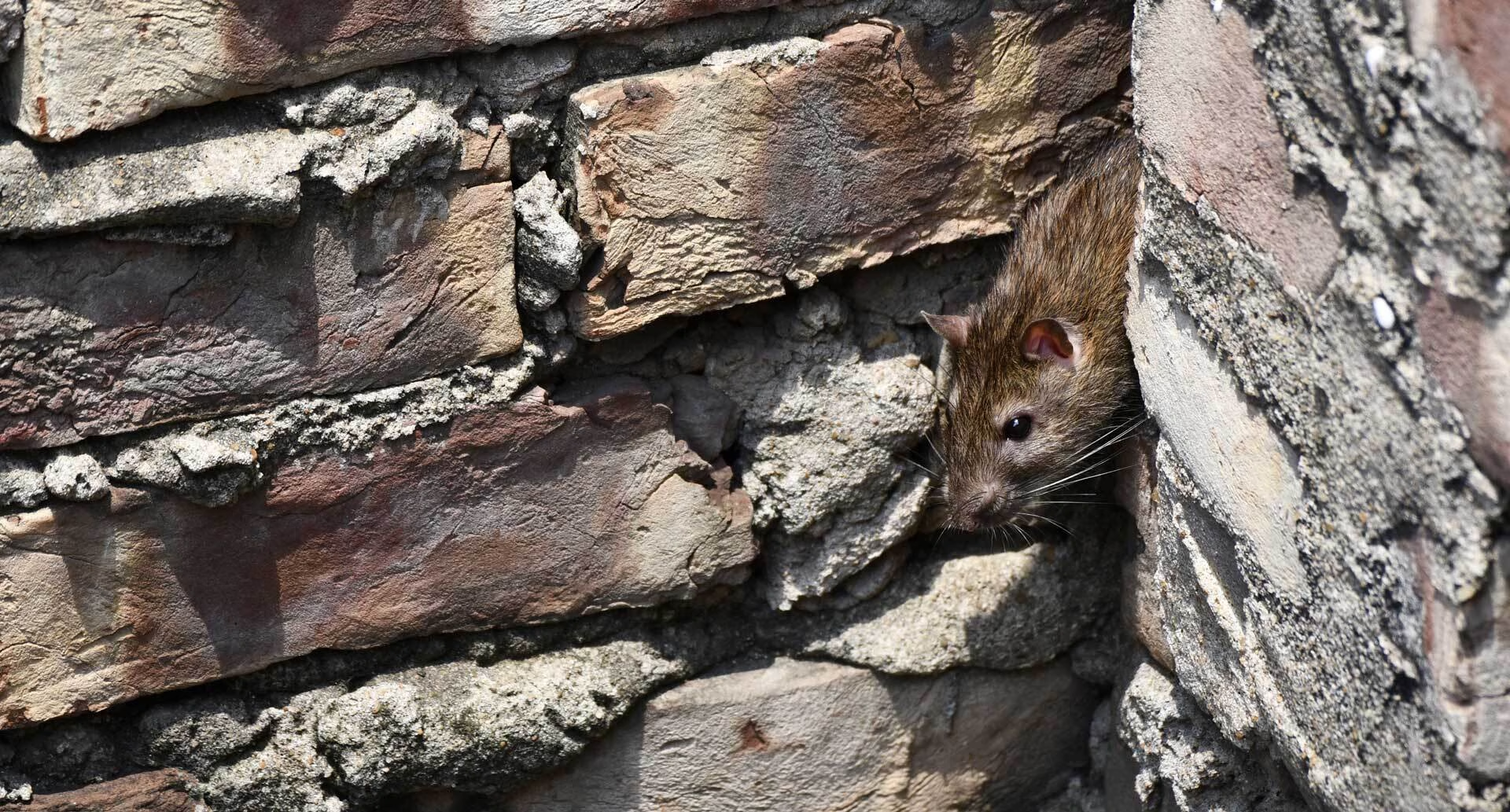
Roof rats are quite good climbers. They can easily enter buildings from overhanging branches, fences, cables or adjoining structures.
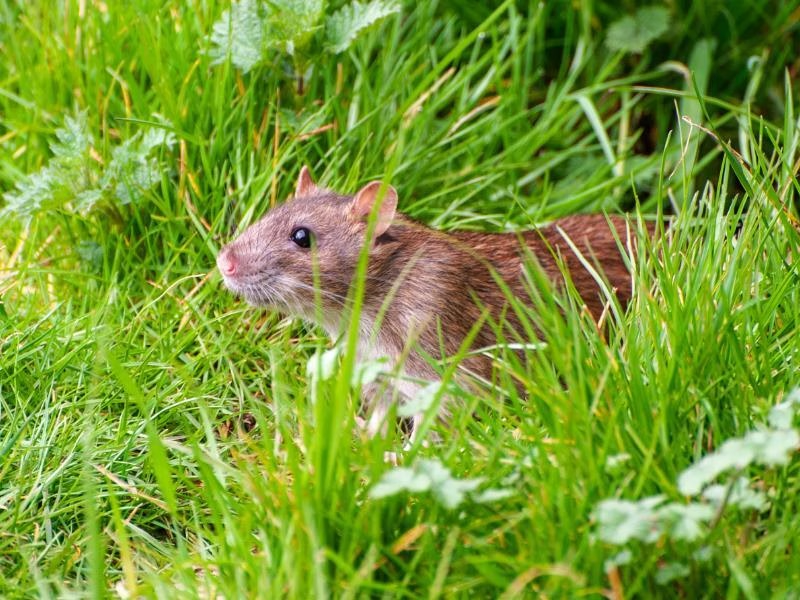
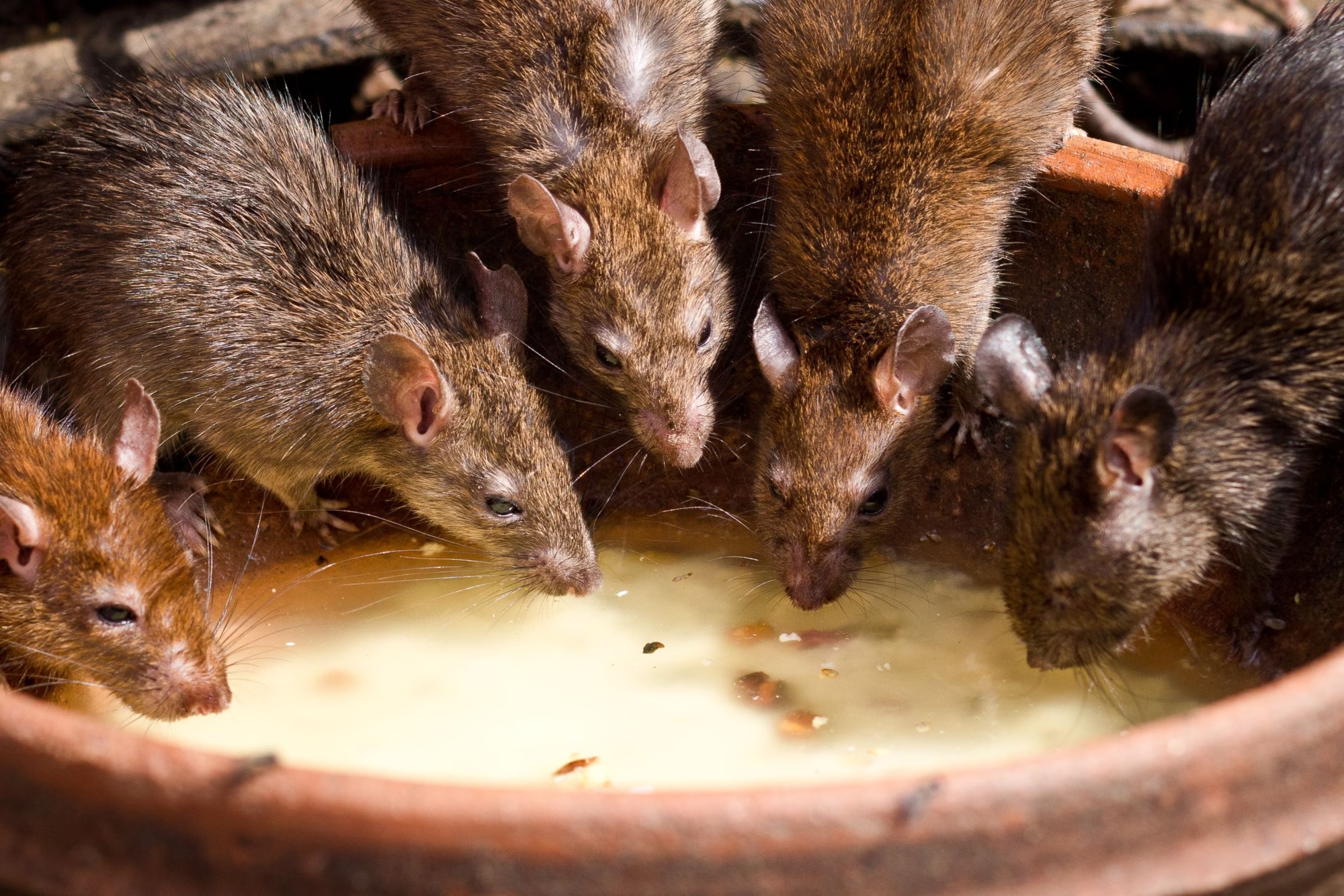
Norway rats are larger and quite often spend more time at ground level. They typically shelter under buildings, inside storage areas, near drains and in burrows next to retaining walls, garden beds or where bins are located.
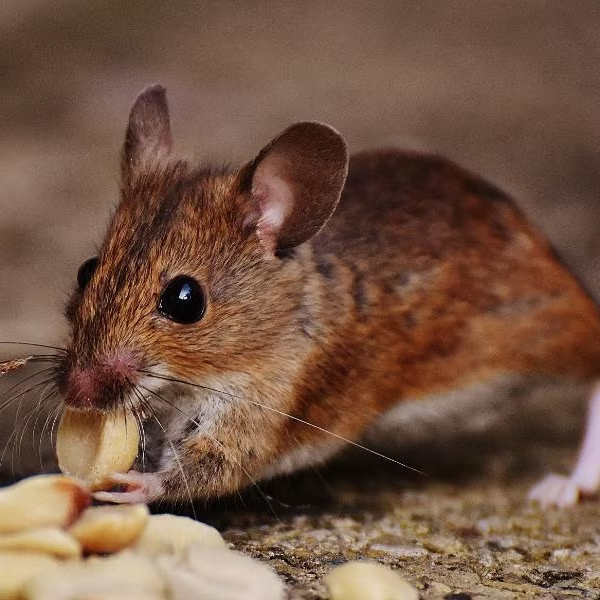
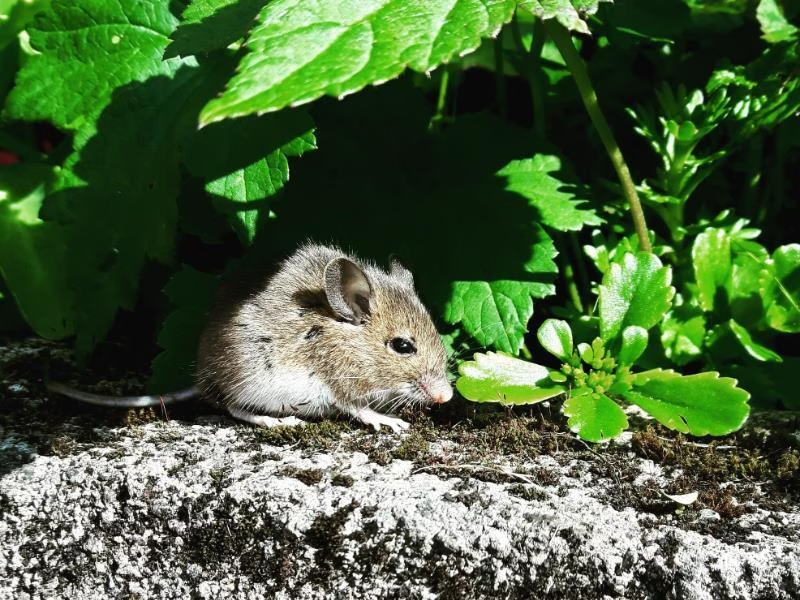
House mice are much smaller and can enter through surprisingly narrow gaps, including weep holes. They are often found in areas where food and shelter are readily available.
Identifying the rodent involved helps determine where management measures should be placed and which parts of the property require closer attention.
Signs of Rodent Activity
Rats and mice are mainly active at night, so not often seen. Typically, the first indication is scratching or movement inside the roof or walls.
More evidence of rodent activity:
- Droppings in cupboards roof voids or storage areas
- Gnaw marks on food packaging, timber, plastic, or wiring
- Greasy rub marks along walls and regular travel paths
- Shredded paper or fabric used as nesting material
- Burrows in gardens or retaining walls
- Unusual odour in enclosed areas
- Pets that are interested in a particular wall or cupboard
- Partially eaten fruit or stored goods
Why Control Rodent Activity
Quite simply, they can contaminate food preparation areas and stored products with droppings, urine and body contact. They may carry foodborne illnesses and can introduce fleas into your home or business.
Rats and mice often chew electrical cable insulation which can be dangerous. Damaged wiring can may create a fire risk.
In commercial facilities, the presence of minor rodent activity can be a problem for food safety, stock quality, customer confidence and compliance to food safety standards.
Professional Rodent Inspection
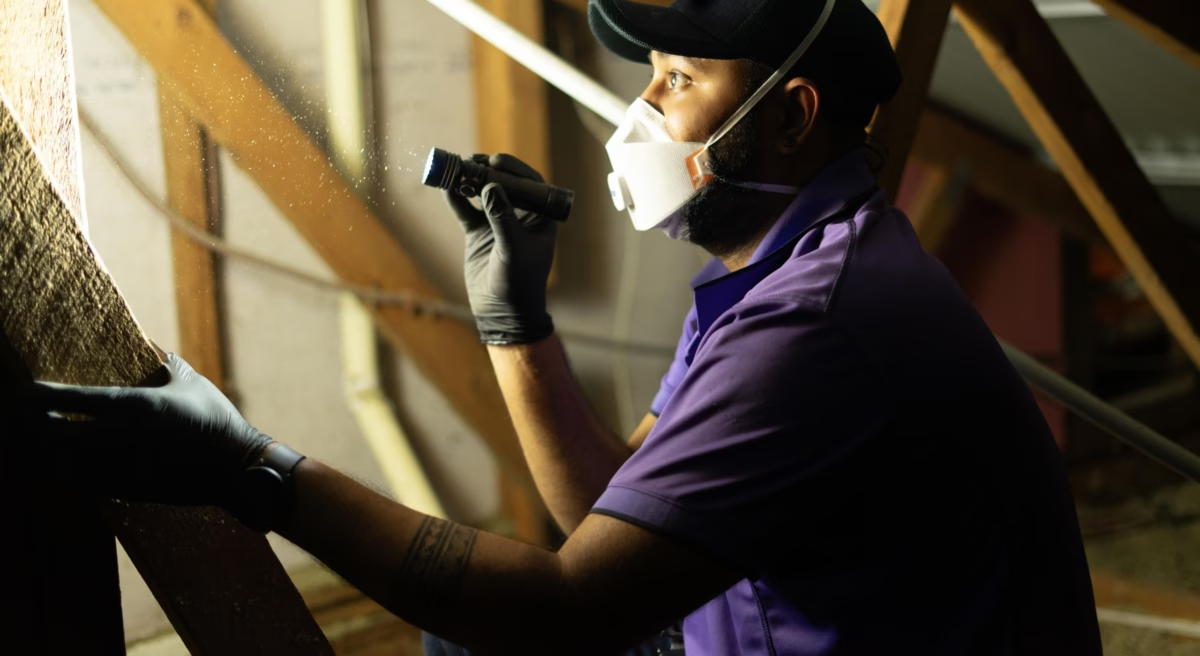
A professional Pest Technician looks beyond the obvious signs. The Technician will assess where rodents are feeding, nesting, and travelling, along with the conducive conditions that allows them to continue to infest a structure.
Inspection usually involves checking the roof void, subfloor, kitchen, garage, shed, bin area, gardens and external areas of the structure. Potential access points can be a gap around a pipe, damaged vents, open eaves or poorly entryways.
A thorough inspection allows a control program to be designed around the property rather than relying on a standard treatment for every situation.
Rodent Treatment and Management
Rodent control is varied and might require the use of multiple products. Secured bait stations, traps, monitoring devices and recommendations for improving hygiene or access control are commonly used. The methods used will depend on the species present and the level of activity. Safe management of rodents is key.
Rodenticides should be used carefully and according to their registered label directions. They must be contained in secure stations and should positioned along known travel routes. Traps may be more suitable in sensitive locations and where recovering the rodent is important.
Follow-up visits will be recommended and depending on product used, required by law to check bait consumption, remove captured rodents, reassess activity and adjust the program where necessary. Larger commercial properties require ongoing monitoring to detect changes in rodent pressure early.
Rodent Control Risk Management
Treatment is most effective when food, water, shelter, and other conditions conducive to rodent behaviour are also addressed.
Integrated pest management involves prevention measures:
- Keeping food in sealed containers
- Cleaning to maintain a high standard of food safety
- Emptying and cleaning bins regularly
- Reducing clutter in storage areas
- Trimming branches away from contact with roofs
- Repairing damaged vents and gaps around service penetrations
- Keeping external doors properly sealed
- Fixing leaks and drainage problems
Arrange For Professional Rodent Management
If you are hearing movement in the roof, finding droppings, or noticing damage around your property, it is worth acting before the problem grows. Allure Pest Solutions provides practical rodent inspection and management programs for residential and commercial properties throughout Brisbane and South East Queensland.
Our aim is not simply to remove the immediate activity, but to identify why rodents are present and help reduce the likelihood of them returning.